Wednesday, May 19, 2010

The Hemingses of Monticello: An American Family - Winner, History, 2009


The Hemingses of Monticello: An American FamilyThe Hemingses of Monticello: An American Family
By: Annette Gordon-Reed
W.W. Norton & Co, 2008

The controversy surrounding the relationship between Thomas Jefferson and his slave, Sally Hemmings, had its beginnings while Jefferson was still alive, but has to the forefront of Jefferson scholarship in recent years with the development of DNA technology that could potentially support or disprove (or muddle!) the controversy.  Annette Gordon-Reed's book, The Hemingses of Monticello, is her second on the subject - the first being Thomas Jefferson & Sally Hemings: An American Controversy (1997).  Her first discussed the specific relationship between Jefferson and Hemings.  The Hemingses of Monticello examines the vast interconnectedness between the two families leading up to Jefferson and Hemings and on a little further into the decendents, especially of Hemings. 


There are a LOT of names, places, and dates in this book.  Gordon-Reed clearly did a great deal of research into the papers of Thomas Jefferson and those around him.  She places a heavy emphasis on the need to recognize slaves as people with real feelings and reactions during this time period, which I found to be very interesting.  I do think it is important to always remember that, but I also think that in her attempt she also dismisses the historical fact of the law and slavery as not necessarily accurate depictions of how life really was.  In do this, she often seems to place the social values of today on characters living in a different time and social context.  While slaves were human and had true human emotions, white society treated them as if they were less than human (often regardless of personal beliefs).  White men felt that they could take advantage of slave women because slave women were not as human as they were (in their own eyes).  This is what truly made slavery such an abomination.  Gordon-Reed, though, tries desperately to prove, using the social logic of today, that Jefferson must have loved Hemings. 

When I was in college I wrote one of my major papers on this subject and use Gordon-Reed's first book as one of my sources.  Because of that, I was very interested to see what more she had to say.  While the stories of the two families and how they come in and out of each others' lives is very interesting, she can be repetitive and a bit tedious.  Gordon-Reed makes many assumptions along the way based on deduction but not necessarily fact, which continually reminded me that, as unsatisfying as it is, we will probably never really know what happened between Thomas Jefferson and Sally Hemings.

Wednesday, April 21, 2010

2010 Pulitzer Winners...

...or four more books behind...

But that's OK!  I'm in the middle of listening to the The Hemingses of Monticello, but, in the meantime, the 2010 winners that I will be adding to my list are:


Fiction: Tinkers by Paul Harding

Tinkers

History: Lords of Finance: The Bankers Who Broke the World by Liaquat Ahamed
Lords of Finance: The Bankers Who Broke the World

Biography: The First Tycoon: The Epic Life of Cornelius Vanderbilt by T.J. Stiles

The First Tycoon: The Epic Life of Cornelius Vanderbilt (Vintage)

General Nonfiction: The Dead Hand: The Untold Story of the Cold War Arms Race and its Dangerous Legacy by David E. Hoffman

The Dead Hand: The Untold Story of the Cold War Arms Race and its Dangerous Legacy

Anybody excited about any of these?

Thursday, April 08, 2010

Olive Kitteridge - Winner, Fiction, 2009

Olive Kitteridge
Olive Kitteridge (Later Printing Edition)By: Elizabeth Strout
Random House, 2008


Olive Kitteridge is a story about life.  Strout used a collection of thirteen short stories about the people of coastal Crosby, Maine with one connecting character, Olive Kitteridge, to tie them all together.  Sometimes Olive is the main character and sometime she is only mentioned, but in the end the story of her life has been told.  I laughed, I cried, I felt annoyed, I felt empathy.  It is raw and beautiful.  

Because Strout's novel is a compilation of short stories, there is not a true climax of the story, but that fits well.  The reader really gets the sense that they are just following through life with these people.  Their experiences are mundane, which is okay because there is something in Olive Kitteridge that most people of all ages can relate to.  She explores what it is like to be young and what it is like to be old. I will warn that there are parts of this book that deal with situations and contain language that might not be suitable for all ages.  That aside, I enjoyed Olive Kitteridge and would be interested to if others felt the same way.

Wednesday, March 10, 2010

Taking a Break...Again

I promise I haven't quit! I'm just trying to my masters finished up and it is taking up all of my recreational reading time. I should be able to pick up reading again in May. Until then, happy reading!

Thursday, January 28, 2010

Lamb in His Bosom - Winner, Novel, 1934

Lamb in His Bosom
By: Caroline Miller
Harper & Brothers, 1933

In her book, Lamb in His Bosom, Caroline Miller portrays the lives of an extended family living in backwoods Georgia in the years leading up to and during the Civil War. It follows each member of the family through the years, focusing especially on the daughter, Cean Smith (nee Carver) who is recently married at the beginning of the book. Miller provides a beautiful description of the trials and joys of life and dependence on God in the rural South and I found myself truly drawn into the lives of these characters.

What truly interested me most about this book was the fact that I had also recently finished Gone With the Wind (Pulitzer winner, 1937). Both stories took place in Georgia in overlapping time periods but from opposite viewpoints. I believe that if Scarlett O'Hara lived near the Smiths and Carvers she would have dismissed them - using her term "white trash" - but these families were so much more. We see that, while they don't own plantations or slaves, they work hard and make a good living - even affording small luxuries at times. They know no other way of life and, so, have no other expectations than what comes. It was fascinating to compare the two stories of different classes of Georgians from the same period.

My favorite things to read about, whether it is fiction or non-fiction, are the ways that people live their lives everyday. Lamb in His Bosom provided me with a vivid picture of rural life unlike any I had read before. I wholeheartedly recommend it to all!

The image above is the original artwork from the first edition published by Harper & Brothers.

Wednesday, January 13, 2010

House Made of Dawn - Winner, Novel, 1969

House Made of Dawn
By: N. Scott Momaday
Harper & Row, 1968

N. Scott Momaday's House Made of Dawn provides an interesting look into the struggles Native Americans who come from reservations to find identity. He follows the life of a young man named Abel who has returned to his reservation in New Mexico after fighting in World War II. He has been deeply affected by the war and struggles to hold a job and maintain relationships. Abel moves to California to try to find himself but eventually realizes that he will only find himself back home on the reservation.

Momaday based his story on his life experiences as a Native American and on the real experiences of other Native Americans. I found the book a bit difficult to follow and was not surprised to discover after reading that it was originally intended to be a collection of poems. There were times that the story felt a bit disjointed for me. I do think that he provides an interesting perspective on real issues for the Native American community and would be interested to hear how Native Americans read it today.

The image above is the first edition cover published by Harper & Row.

Friday, December 18, 2009

The Guns of August - Winner, Non-Fiction, 1963

The Guns of August
By: Barbara W. Tuchman
Random House, 1962


I've skipped ahead in time a little because I was having to listen to books during the semester instead of reading them, and this was the next on my list that was available through the library. Tuchman's Guns of August provides a very thorough overview of the events of the first month of World War I - August 1914. It really is amazing how many things happening in that month and how complicated it all was. I've come to realize that, at least in my experience, as Americans we kind of skim over the early part of the war in school, reading some fiction but not getting too much into the politics, to get to the part where America was involved. I'm not criticizing - I understand that when we only have a limited amount of time to focus on a subject we are much more likely to focus on the part that interests us, the part we were involved in. But, it means that as I was listening I realized that I just kept waiting for Archduke Ferdinand and his wife to be assassinated and kick this whole thing off and then I didn't really know what happened next (note that the Archduke and his wife were assassinated in June 1914 and, therefore, the event was not even covered in this book).

I really struggled through this book. I have said it before, but I just do not enjoy reading about battle tactics and war politics. Give me culture! I want to hear how it affected the people! But I also realize that it is important to be aware of how everything went down because these are things that have affected relationships between nations for decades - almost a century now. Sadly, I found some bits and pieces that I discovered in researching about the book much more interesting than the book itself. President John F. Kennedy loved The Guns of August so much that he quoted it often and even commanded his cabinet and military leaders to read it. The book was given the Pulitzer for Non-Fiction instead of History because Pulitzer's will specifically stated that the history winners could only be about American history. I also thought it interesting that it was on the New York Times best seller list for forty-two consecutive weeks. I would have thought it would have such mass appeal, but people will surprise you when given the right time, political climate, and a recommendation from the president.


Note: The image above is of the original 1962 Random House cover of The Guns of August.

Thursday, November 05, 2009

All the King's Men - Winner, Fiction, 1947

All the King's Men
By: Robert Penn Warren
Harcourt Brace and Company, 1946

Well, I did finally get through one book (Pulitzer book, that is. I've read five or six books related to the history of American libraries in the last month...). Thanks to the modern miracle of free online audiobooks that can be checked out through various libraries, I was able to listen to All the King's Men while working. Warren's book, not to be confused with Carl Bernstein and Bob Woodward's 1974 investigation into Watergate - All the President's Men, is the story of the political rise and fall of the fictional governor Willie Stark, loosely based on Huey Long, former governor and U.S. Senator from Louisiana.

Warren creates an interesting story that definitely brought to mind images of the rampant political corruption in Louisiana in the first half of the 1900s (and arguably even later) that I learned about in history class. He also show, I believe, his incredible literary skills by simply keeping his story straight. Warren makes extensive use of the "flashback" literary tool to the point that the reader tends to lose all sense of past and present. While I'm sure this is effective when reading the actual book, it caused me some problems as I listened. I often had trouble remembering where we were in time, especially after pausing to go home for the night.

For this reason I definitely recommend reading the actual printed book. Something else that helped me to follow along generally was the fact that I had watched the Academy award-winning movie adaptation recently. While the movie leaves out multiple story lines and deviates from the plot of the book, seeing the movie helped me to envision what was going on in the book and anticipate the time-jumping. Warren did claim that he did not intend for this book to be a political story, but I feel that it and the movie are both important commentaries on how power can corrupt. If you have a chance, read the book and/or watch the movie.

The image above is Huey P. Long.

Again, I will continue to take a "break" from reading until the beginning of December. I am currently listening to another book and will blog about it when I get a chance.

Friday, September 25, 2009

Just a brief vacation...


...well, maybe vacation isn't the word for it, but I will, unfortunately, have to take a little break from blogging about my books. For those who don't know me, I am working on my Masters in Library Science and this semester my classes are very heavy on the reading. I will continue to read as I can and listen to books that are available in audio form. As I finish those, I will blog about them, but it will probably be pretty irregular. Don't give up on me! I'm not giving up, just trying to get things under control :)

Tuesday, September 15, 2009

Admiral of the Ocean Sea - Winner, Biography, 1943

Admiral of the Ocean Sea
By: Samuel Eliot Morison
Little, Brown, and Company, 1942

In Admiral of the Ocean Sea, Morison gives a comprehensive biography of the life of Christopher Columbus. Apparently, Morison (who was a prolific author of the time and would win the Pulitzer again in 1960) was well known for the authority and readability of this books. I would emphasize the authority over the readability for this book.

Morison was a Rear Admiral in the United States Navy and was, therefore, probably so familiar with maritime history that I believe it would have been impossible for him to completely bring it down to layman's terms. I was able to follow generally, but was often lost in his descriptions of boat and ringings and winds and such. There were also a large number of references to names and places that I was unfamiliar with. To be fair, I did listen to a recording of this book and think that was a big source of the problems I had in following along. It would have helped greatly to have a map in front of me.

Morison did an excellent job of describing what are commonly thought to be Columbus's routes of travel. To research for the book he chartered a boat and actually sailed these routes himself. Interestingly, there is an overlay of the narrative of this trip on top of the story of Columbus's life. I would recommend this book to any reader interested in the history of explorers but would definitely suggest reading a physical copy instead of listening to the audio!

Wednesday, August 26, 2009

Gone With The Wind - Winner, Novel, 1937

Gone With The Wind
By: Margaret Mitchell
Macmillan, 1936

I don't know what else to say except that I LOVED Gone With the Wind. Earlier this year I purchased a copy for $5 at an antique store and am so glad that I will have it to reread again in the future. As a student of history, Mitchell's descriptions of life in the Deep South before, during and after the Civil War drew me in. So often the victor determines the story of a war, and so I found a long and detailed story from the side of the losers to be quite interesting. The Civil War and Reconstruction were so complicated that it helps to read about them through the lens of a story. I was often so caught up in the story of it all that I would completely forget that I was also learning about an important part of the history of our country from a perspective that I only knew about superficially. Clearly, Gone With the Wind is fiction and much must be taken with a grain of salt, but Margaret Mitchell spent tireless months checking her facts and so it is safe to say that one can at least derive a general sense of what the era was like for those living in and around Atlanta (based on knowledge from the 1930s).

I was a bit unsure when I began reading the book because I did not enjoy the movie. But, as I began to read, I realized that there are so many things in the book that just couldn't have made it into the movie that help the reader understand the characters and their drama much more fully. For example, throughout the book there are many things that go on internally for Scarlett that could not be portrayed in the movie format but made her a fully dimensional character in the book. There are many emotions that are felt and not expressed that I imagine the filmmakers truly struggled with. I do plan on watching the movie again, from my new perspective this time. I do recommend Gone With the Wind - especially to those who have not lived in the South. Regardless of ones opinions of the South and its attitudes during that era, at least one can learn to appreciate the time, place, and culture they were coming from.

[Photo Credit: Vivian Leigh as Scarlett O'Hara]

Wednesday, July 29, 2009

The People's Choice - Winner, Non-Fiction, 1934

The People's Choice
By: Herbert Agar
Houghton Mifflin Company, 1933

Herbert Agar's The People's Choice really took me by surprise. I haven't had the best experiences with the politically oriented non-fiction Pulitzer winners, but Agar's book really drew me in.

His point in the book is that the first twenty-nine presidents of the United States, from George Washington to Warren Harding, can be divided into three eras. He claims that the first six presidents, from Washington to J.Q. Adams, were not democratic at all - they created an oligarchy, or rule by the wealthy. Not only were each of these men of the upper class, but Agar thinks that each also felt that only the upper classes were fit to rule.

The election of Andrew Jackson issued in the next era of actual democratic rule. For the most part the presidents from Jackson to Lincoln (Agar also included Jefferson Davis) came from the lower or middle classes and worked their way up to the presidency from nothing. This represents a time of expansion and growth in actual rule of the people.

The third era that Agar identifies began during the years of discouragement after the Civil War and continued until the election of William McKinley. He characterizes it as a plutocracy, where the wealthy tended to have more political power and social mobility was limited.

While Agar's view of American history might be a little dated, it did cause me to consider the presidencies of these men different way. He also provides a really useful summary of the administrations and issues of each of our presidents until after the first World War. Agar lived until 1980 and I would be interested to see if, in his later works, he continued his evaluation of the trends in the American presidency.

Monday, July 06, 2009

The Store - Winner, Novel, 1933

The Store
By: T.S. Stribling
Doubleday, 1932

I couldn't do it. I tried and tried to finish The Store and I just couldn't. I realized about halfway through that I just didn't care at all what happened to Colonel Miltiades Vaiden and his fellow citizens of Florence, Alabama. I know I should have persevered, but I just felt like I was wasting valuable time. Please don't judge me - this is the first Pulitzer Prize winner in the Fiction category that I have not finished. I promise I will try not to make it too much of a habit.

I discovered, after reading a good chunk of the book, that The Store is actually the second book in a trilogy by Stribling about the Vaiden family in the post-Reconstruction South. That in itself explained some of the problem I was having connecting with the characters - they had been developed in a previous volume and, therefore, Stribling felt we could skip the preliminaries that might have given me some sort of attachment. I was just so disappointed because when I started the book I had such high hopes for something different in the Pulitzer winners for fiction. This book was clearly no love story. It addresses issues that were prevalent in the South in the decades after the Civil War. What place did the former slave have in society? Where were ruined plantation owners to turn for employment when they could not function without slaves? How would the South rise up above the ruins after the War and Reconstruction? Who would be their voice in government? These issues are vaguely touched on, but mostly the story focus on things that I found to be insignificant and petty. I also did not enjoy the story enough to be willing to put up with the excessive (though culturally common at the time) use of the "N" word and derogatory comments about freed slaves. I won't rail any longer. I simply did not enjoy this book.

Monday, June 22, 2009

John Hay - From Poetry to Politics - Winner, Biography, 1934

John Hay - From Poetry to Politics
By: Tyler Dennett
Dodd, Mead & Company, 1933

John Hay is another of those political figures (that I often run into in my readings of the Pulitzer winners) whose name was familiar to me, but I couldn't remember exactly what it was that he was known for. I remembered mentions of his name in the biographies of Theodore Roosevelt and Walt Whitman plus a few mentions in different NPR programs I had listened to. So, I had a general idea of when he was involved in politics but nothing else. Tyler Dennett's biography of Hay proved surprisingly interesting reading for a political biography (or, heaven forbid, I'm just getting used to the endless talk of this policy and that).

Hay worked in political administrations in various capacities from Abraham Lincoln to Theodore Roosevelt. From Illinois, Hay came to Washington, DC as a secretary with Lincoln and his entourage. He followed this by stints as military representative and ambassador in various places in Europe, but the position that he is best known for was Secretary of State. While you may not be familiar with his name, issues that you might be familiar with that Hay played a key role in were the Open Door Policy with China, negotiations concerning the United States' building of the Panama Canal, negotiations concerning the Alaskan border with Canada, and many treaties with foreign nations as the United States emerged as a world power.

I'm not sure who I could say would be interested in reading this biography, but I could recommend it for anyone interested in the history of the rise in power of the United States in the world, as Hay was instrumental in this transition time.

Wednesday, June 03, 2009

A History of the United States - Winner, Non-fiction, 1926

A History of the United States
By: Edward Channing
Macmillan, 1905 - v.1
Macmillan, 1908 - v.2
Macmillan, 1912 - v.3
Macmillan, 1917 - v.4
Macmillan, 1921 - v.5

As you can tell, I have taken a step back to an earlier work than the ones I have been reading recently. Edward Channing wrote the six volumes of A History of the United States between the years 1905 and 1925 (I have only listed volumes 1-5 because I am going to be honest - I only read volumes 1-5). Had Channing not been such an interesting and succinct writer, there is no way I would have made it through as many volumes as I did. As I began the first volume, though, I realized that this was going to be a great "summary" of American history that would help me to tie all of the pieces together. I love American history and was a history major in college, but I have never really experienced a good summary of the events in the United States from as far back as we have record up to the end of the Civil War.

This work is not easy reading in that it is a huge reading commitment, but I would say that it is written in an easily understood manner. This would be a good book for anyone who is REALLY interested in American history, but I think it would be even more appropriate for someone who did not grow up in the United States (but who does have a good understanding of the English language). It provides a truly useful overview for those who can persevere to the end.

Friday, May 22, 2009

The Significance of Sections in American History - Winner, Non-Fiction, 1933

The Significance of Sections in American History
By: Frederick J. Turner
Henry Holt & Co., 1932

The Significance of Sections in American History is a collection of essays written by Frederick J. Turner concerning just that - the significance of different sections of the country on the history of the United States. It seems that Turner is trying to convince his audience that there are more sections in America than just North and South, but it appears that the only other sections he could name were East and West. While I found this philosophical work to be tedious and nothing new, there are some interesting things about it. First, it is a collection of works that Turner wrote between 1895 and 1926. I am guessing that the essays were put together in book form in 1932, several years after the last was written, because this was the year in which Turner died. This seems to explain why his ideas feel dated (for the 1930s) - they were probably current or even new when originally written. The other thing that I found interesting was the fact that the Pulitzer was awarded to him posthumously. Posthumous awards always grab my attention because I wonder if there is really a point since the author is not there to see their work being honored. I guess one could argue that it is better than no recognition at all (especially for surviving family members). Just my thoughts on the matter...

Tuesday, May 12, 2009

Grover Cleveland: A Study in Courage - Winner, Biography, 1933

Grover Cleveland: A Study in Courage
By: Allan Nevins
Dodd Mead, 1932


"Tell the truth."
-Grover Cleveland, 1884


When I picked up this book I had no idea what to expect. I'm embarrassed to say that the only thing I knew about Grover Cleveland was that he was our president (and I had a vague image in my mind of a large guy with a bushy mustache). That's it! I didn't know when he was president (accept that it was when pictures would have been in black and white) or anything about what he did during his presidency or that he was the only president to serve two non-consecutive terms. So, my thinking was that if I didn't know anything about him it meant that we didn't study him much in all of my history classes over the years which means he probably didn't do anything that exciting which means this book will be BO-RING. I was pleasantly surprised to find that this was not the case.


Several things drew me into the story of Grover Cleveland. To begin with, I would not have been drawn in if it hadn't been for the excellent story telling of Allan Nevins. I have read many biographies of political figures and found them to be monotonous and dull. He managed to make Cleveland's political life just as interesting to me as his personal life (a great feat in itself!).


Another thing that helped me to enjoy this book is that it takes place in a time in history that I really enjoy learning about. This was a time in American history when political corruption was rampant and actually accepted as the way things were done. These were the days of bosses and political machines, like Tammany Hall, who controlled the political leanings of large portions of the population of several of our urban centers. Cleveland entered politics at a time when Americans were becoming weary of the corruption. They sought an honest man who simply wanted to do what was best for the people. Cleveland advanced rapidly through the political ranks because he was not only an upright man, but he had the courage (hence the book's subtitle, A Study in Courage) to put a stop to as many of the corrupting influences in government as he could. This aspect of Cleveland's career is what Nevins chooses to focus on and I found it very refreshing. It is not often that we see a politician who is willing to not only stand up and say, "We will not do things this way anymore!" but also to actually put that into action.


For those interested in biographies of politicians or leaders, this is a great read, and there is probably a lesson or two to be learned in our own political environment today.

Thursday, April 23, 2009

The Good Earth - Winner, Novel, 1932

The Good Earth
By: Pearl S. Buck
John Day, 1931

The Good Earth provided nice change in the genre of fiction for Pulitzer Prize winners. The vast majority of the novels I have read so far, from this time period, are stories about American women (usually wealthy), their families, and the drama they go through over a lifetime. Pearl S. Buck's book is instead about a Chinese farmer, his family, and the drama they go through in a lifetime. While this plot line is vaguely similar to those I mentioned before, we at least have a glimpse in a culture that many are not very familiar with.

After reading this book, I began thinking about the plot construction in novels from the 1920's and 1930's, how they are all VERY similar, and how they differ from the novels written today. From my observations, the best comparison I can make is the difference between maneuvering within a movie on a VHS tape and watching a movie on DVD. The stories from the earlier part of the last century often take the reader through the life of a central character. To move forward, the author still writes about every part of the character's life, but some parts move more quickly than others - like watching a movie on a VHS tape and fast-forwarding. You still see everything happen, just faster. On the other hand, it seems that authors today write about a period in the main characters life and then feel free to just jump ahead - like skipping forward on a DVD. You don't see things that happen in between. I'm not sure if I like the older or newer ways better - with the older authors you really get to know a character through all of its life experiences, important or mundane. But, these can get tedious. On the other hand, the newer authors develop their characters at the important times in their lives, so you see them at their very best and their very worst. Hm. Just a thought. Thanks for letting me ramble. What do you think? Does anybody out there see the same trends that I do?

(The image above was taken by Diego de Pol and is used here under Creative Commons license)

Wednesday, April 15, 2009

My Experiences in the World War - Winner, Non-Fiction, 1932

My Experiences in the World War
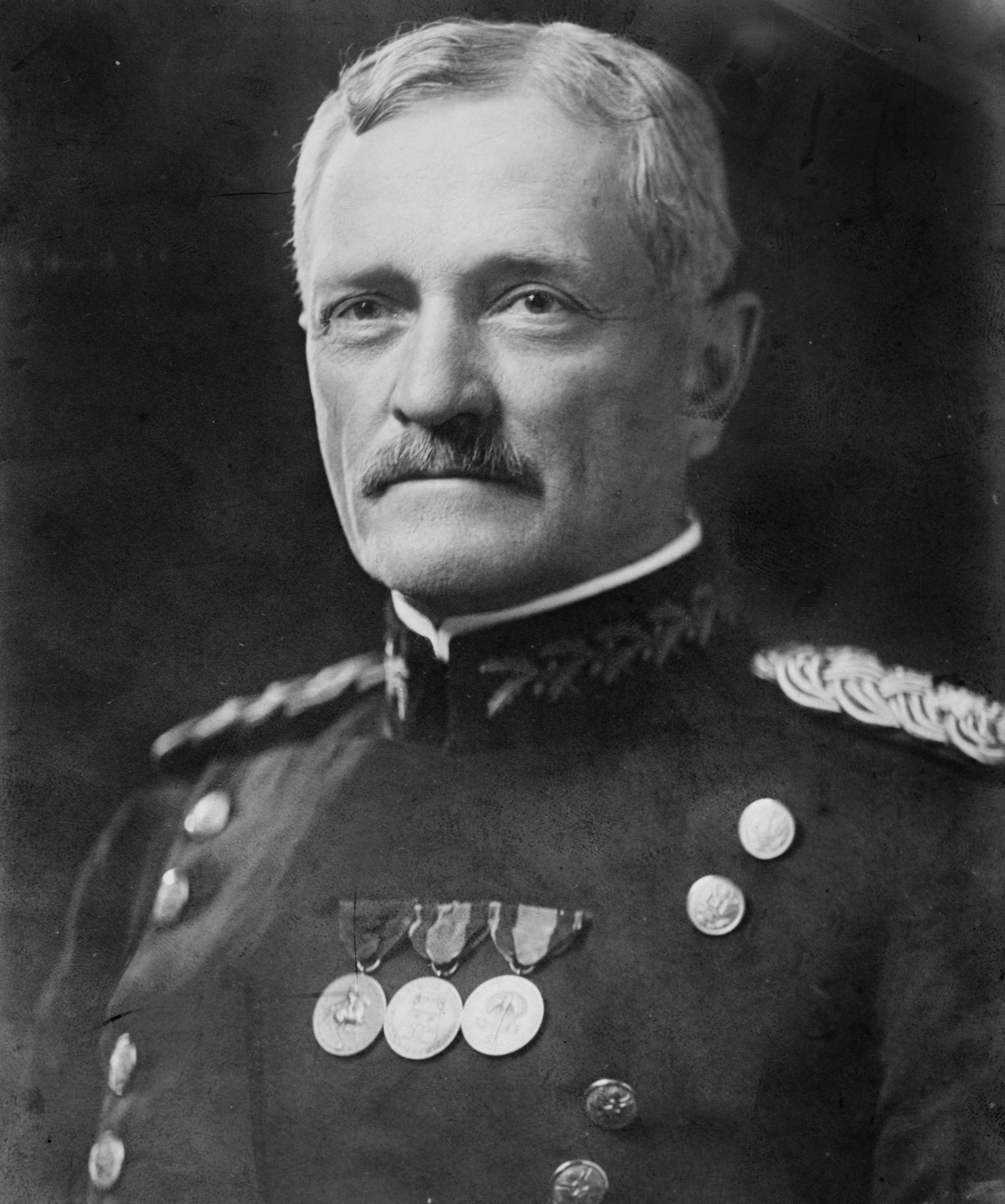
By: General John J. Pershing
Frederick A. Stokes, 1931

As far as war histories go, and those of you who are regular readers of my blog probably know I really dislike war histories, this one, I must admit, was bearable. General John J. Pershing led the American Expeditionary Force in World War I and earned the highest rank ever awarded by the army during the life of the individual - General of the Armies. Pershing kept a detailed diary of his days as commander of the American forces in World War I, and he structures this book around that diary. Each section of the book begins with an excerpt from his diary, followed by elaboration on the events mentioned in that excerpt.

This book provided great first-hand detail of a war that the United States joined belatedly and was sorely unprepared for. Pershing points out many issues that the American military faced - including lack of training and supplies and power struggles between Allied leaders over who would control American troops in Europe. Something that did excite me while reading was Pershing's interaction with two Americans in Europe that I have already read Pulitzer-prize winning books on - Admiral William Sowden Sims (The Victory at Sea, winner in 1921) and Ambassador Walter H. Page (The Life & Letters of Walter H. Page, winner in 1923 & The Training of an American: The Early Life & Letters of Walter H. Page, winner in 1929). It was very interesting to see what I learned previously from another perspective.

Wednesday, March 25, 2009

Years of Grace - Winner, Novel, 1931

Years of Grace
By: Margaret Ayers Barnes
Hougton Mifflin Co., 1930

I have no witty or intelligent comments to begin this one with, so I'll just jump right into it. Years of Grace is the story of the life of Jane Ward, a young girl in the beginning who grows up in the Victorian Age and spends her latter years in the Jazz Age. Interesting, the book is divided into four sections: the first three are named for the man she loves at that time in her life and the last is named for her children and follows their love interests.

I won't go into the many details of Jane's life, but I believe I can summarize the story. Jane spends her early years ahead of her time. She is growing up in the Victorian Age with some very Jazz Age ideas. While the women of her mother's generation spend their time keeping up appearances of propriety while often living secret lives, Jane has very strong feelings that women should be free to make the choices that will make them happy - even if those choices are against what is considered socially acceptable. Then, Jane goes off to school, comes home, marries, has children, and eventually has her own secret life. As the Jazz Age replaces the Victorian Age, Jane's ideas begin their reversal. She sees her own children (especially her daughters) growing to be quite modern but with many of the same ideas Jane had as a young woman. On the other hand, Jane begins to think much more like her own mother did and values propriety as she never had before.

The point that Margaret Ayers Barnes is trying to make is, as in the words of King Solomon, "There is nothing new under the sun." Times may change, but, apparently, people do not.