The Coming of the War of 1914
By: Bernadotte E. Schmitt
Scribner, 1930
I really don't have much to say about this book. I have mentioned before that I really struggle with the books that concern the history of warfare. I don't mind learning about what regular people did during the war, but you've lost me as soon as you start talking about battle tactics or political events leading to war - especially a world war that involves many different political entities. Bernadotte Schmitt is clearly an expert on the events that led up to World War I and he spends two volumes discussing those events (and placing the blame on Germany). Not a single human interest story! It is ALL politics. I would be interested to hear the opinion of a war buff or historian who could tell better than I if he was on point or not. Any of those out there???
Friday, February 13, 2009


Wednesday, January 28, 2009
The Old Man and the Sea - Winner, Fiction, 1953
The Old Man and The Sea
By: Ernest Hemingway
Scribner & Sons, 1952
By: Ernest Hemingway
Scribner & Sons, 1952

I found this novella to be sad but interesting as well. Almost the entire story takes place at night and we listened to it driving at night, so I think that really helped me to picture the events in my mind. Usually I hold back on too many detail of a story so that I don't ruin it for those who haven't read it, but I think most have read The Old Man and the Sea at some point in their lives. So, I will go into a little more detail than usual.
Hemingway's book is the story of an old man who used to be a master fisherman but is losing his luck in his later years. Everyone remembers the glory of his past but feels sorry for him because he doesn't catch much anymore. The old man is aware of their pity and is determined to bring in the Big One to prove his time is not up. His chance comes one evening when his bait is taken by the biggest marlin this man has ever seen. He spends several days and nights pulling the giant fish in in such a way that it won't break his line or upset his boat. Finally, he is able to get the fish close enough that he can kill it and strap it to the side of his boat for the ride home (it is too big to put in the boat). Sadly, as he makes his way home sharks smell the blood of the marlin and repeatedly attack the boat, eventually taking all of the meat, leaving only the skeleton. The old man is distraught with feelings of failure after expending so much time and effort. The one redeeming fact is that there is still a skeleton on the side of his boat that everyone sees when he arrives home. They know he still has his fishing skills, but the irony is that their pity for him only increases.
This story pulls me in two different directions. On one hand, it seems that Hemingway is demonstrating the futility of life - the old man works so hard and has nothing to show for it but pity in the end. On the other hand, the spirit and determination of the old man that refuses to give up is such and encouragement. If you have never read The Old Man and the Sea it is definitely a must read.
The image above, although it is a political cartoon, is a good illustration of the book. It can be found in the Edmund Valtman collection on the Library of Congress website (The Old Man and the Sea, 1972Published in The Hartford Times, October 31, 1972Ink on duotone paperPrints & Photographs Division (8)LC-USZ62-130426).
Tuesday, December 09, 2008
Charles W. Eliot - Winner, Biography, 1931
Charles W. Eliot

By: Henry James
Houghton Mifflin, 1930

NOTE**This will probably be my last entry until after Christmas. There is just too much going on! I will continue reading over the break, and I hope that you all have a wonderful Christmas!**
Now, to the matter at hand - Charles W. Eliot. Eliot was the youngest man to ever be appointed president of Harvard, at age 35, and remained in that office for 40 years. From his earliest days in the position Eliot worked diligently to completely overhaul the structure of the nation's oldest university. He moved Harvard forward from its focus on classical training to more rounded training that would include the sciences - a change vital for education in the Industrial Age and for keeping up with education offered in Europe.
James's biography, in two volumes, is well written and interesting to read. While it might be a bit long-winded, James does not spend vast amounts of time discussing technical items or deep philosophical themes. This makes the book a relatively easy (though not quick) read for even those who are unfamiliar with educational reform in the late-Nineteenth century. I'm not sure that I can really pinpoint exactly who might like to read this book. Perhaps someone who is studying the history of educational reform, especially higher education? Or maybe a die-hard Harvard alum?
Monday, November 24, 2008
Laughing Boy - Winner, Fiction, 1930
Laughing Boy
By: Oliver LaFarge
Houghton Mifflin Company, 1929
By: Oliver LaFarge
Houghton Mifflin Company, 1929

While I often struggled with the flowery language used to describe Navajo society, mythology, rituals, and even everyday living, I was interested to read a story that is different from any Pulitzer winners I have read to date. Having lived as a child in New Mexico and spending time there most summers of my life since, I was able to visualize LaFarge's descriptions of the outpost towns, landscape, and Navajo dwellings and art. I know I would have never read this book on my own and I'm not sure that I will read it again, but it did expose me to some unfamiliar Navajo ideas and traditions which always make a reading worthwhile.
Wednesday, November 19, 2008
The War of Independence - Winner, Non-Fiction, 1930
The War of Independence
By: Claude H. Van Tyne
Houghton, 1929
I do apologize for the delay in this post, but this book was such a BEATING that it took me a month to get through it. OK, so I'm being a little dramatic, but it was rough. I think part of the problem is that it is volume 2 of Van Tyne's series, The Founding of the American Republic. It became a series when Van Tyne began writing and realized that he could fit it all into one volume, but only the second volume won the Pulitzer. Because he is in the middle of the story, I didn't feel like I fully understood where he was picking up. He also does not write a chronological narrative but focuses more on topical subjects, so I lost interest quickly. The Pulitzer was awarded posthumously, which I find interesting, but that is about it.
I did continue on with my reading while finishing this one, so I will have a post for Laughing Boy within the next couple of days!
By: Claude H. Van Tyne
Houghton, 1929
I do apologize for the delay in this post, but this book was such a BEATING that it took me a month to get through it. OK, so I'm being a little dramatic, but it was rough. I think part of the problem is that it is volume 2 of Van Tyne's series, The Founding of the American Republic. It became a series when Van Tyne began writing and realized that he could fit it all into one volume, but only the second volume won the Pulitzer. Because he is in the middle of the story, I didn't feel like I fully understood where he was picking up. He also does not write a chronological narrative but focuses more on topical subjects, so I lost interest quickly. The Pulitzer was awarded posthumously, which I find interesting, but that is about it.
I did continue on with my reading while finishing this one, so I will have a post for Laughing Boy within the next couple of days!
Monday, October 27, 2008
The Raven: A Biography of Sam Houston: Winner, Biography - 1930
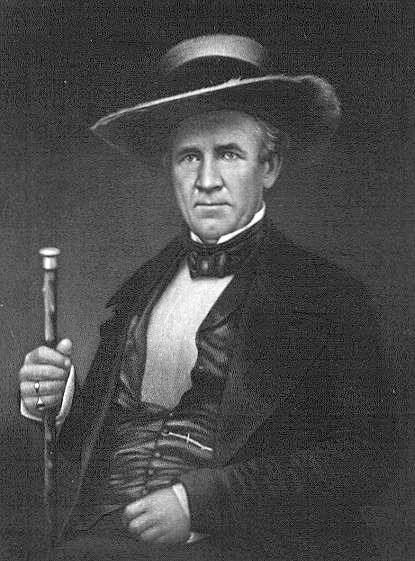
The Raven: A Biography of Sam Houston
By: Marquis James
1929, The Bobbs-Merrill Company
Being a Texan and one whose family has lived in Texas for generations (since before it was a state) I was SUPER excited about reading Marquis James's The Raven. I know that Texans can be annoying about their home state, but if you are from there you understand the deep pride we have in our state's history. I will qualify this by saying that I do not hate your state, or country for that matter. In fact, I love to travel and even live in different places to see how the people live and what it is about their location that they have to be proud of. No matter where you come from there are things in it's past to be proud of. I hope that you are able to find that about your home.
OK, now we can move on. I was excited about reading The Raven because I spent a good deal of my childhood learning about Sam Houston's role in Texas history, but I realized that I knew very little about the actual man. For those unfamiliar with Texas history, Sam Houston was not only a Congressman and Governor of Tennessee, but he was president of the Republic of Texas, Senator from the state of Texas and Governor of Texas. I had know idea what a wild life Houston lived and what a romantic figure he was in America during his lifetime.
The physical descriptions that I read about him gave him a type of John Wayne-image in my mind (maybe not the real John Wayne, but definitely the type of characters he played). He was tall, handsome, and mysterious. A free spirit, Houston a good part of his life living with the Cherokee - even becoming a type of adopted son to a great Cherokee chief. The Cherokee were responsible for his nickname, The Raven.
I could go on and on about all that I learned about Sam Houston in James's book, but I won't bore you. The book is not difficult reading and not so boring either. If you like biographies, I think you'll like this book, but I would be interested to see if there are any non-Texans out there who have read The Raven and if they found it as interesting as I did.
(** Special Note ** I do apologize for being late in posting. For those of you who don't know, I am in school right now and find it difficult to motivate myself to any extra writing. But, I continue to read whether I write or not. Thank you to those who do read the blog. I will do my best to not let you down!)
Thursday, October 09, 2008
Scarlet Sister Mary - Winner, Novel/Fiction, 1929
Scarlet Sister Mary
By: Julia Peterkin
Bobbs-Merrill, 1928
By: Julia Peterkin
Bobbs-Merrill, 1928
"...the story of the harlot of Blue Brook Plantation.''
Bobbs-Merrill
Bobbs-Merrill used the above quote in their promotions for Julia Peterkin's Scarlet Sister Mary, and I found it to be the best summary of her book. The story is simply about the life of Sister Mary who can't seem to settle down and brings 9 children with 9 different fathers into the world along the way. I often wondered, as I read, where the book was going. I guess the problem that needs resolution along the way is whether Mary will ever settle down. For me that is not enough to keep me interested for more than 300 pages. Needless to say, I didn't really enjoy the story of Scarlet Sister Mary.
The value of Peterkin's book, I believe, is not found in the story but in her grasp of the post-emancipation culture, superstitions, religion, and language specific to the Gullah people of the low country plantations of the South Carolina and Georgia coasts. Peterkin lived in South Carolina and probably gained some of her insight as a plantation mistress after her marriage in 1903. The characters in Scarlet Sister Mary speak in the Gullah dialect, which can slow down the reading, but gives a good sense of the people she describes. I wouldn't put Scarlet Sister Mary on any list of books I enjoy, but I would say it is a good read to give a sense of post-Civil War plantation life.
Thursday, September 25, 2008
The Organization & Administration of the Union Army, 1861-1865 - Winner, Non-Fiction, 1929
The Organization & Administration of the Union Army, 1861-1865
By: Fred Albert Shannon
A.H. Clark, 1928

The Organization & Administration of the Union Army, 1861-1865. Sounds like a page turner, huh? As I have admitted on non-fiction books in the past, I was NOT looking forward to this book. I do not enjoy war history. So much of the Civil War history that I have read is all about battle tactics. I HATE battle tactics. But, I persevered and I am actually glad that I did.
Shannon's book avoids battle tactics almost entirely. Instead, he focuses on the trials that the Union had when trying to organize an army. He discusses the importance of states' rights (an issue not much mentioned in the histories Union side of things) in the organization of the army. He also spends a great deal of time on the struggle faced by the soldiers when it came to provisions. These are the things about history that fascinate me - the way people lived during a specific period in history. The soldiers struggled greatly not only with the meager food rations provided them, but even more the clothing provided. Shannon presents several humorous stories of methods used by soldiers to cover up holes worn into the rears of their pants. He continues in the book to discuss the problems in recruiting and maintaining soldiers throughout the war years.
While this book might not be for everyone, I will say that I came very close to enjoying parts of it. I really felt like I learned some new things about the Civil War.
Monday, September 15, 2008
The Training of an American: The Earlier Life & Letters of Walter H. Page - Winner, Biography, 1929

The Training of an American: The Earlier Life & Letters of Walter H. Page
The Training of an American: The Earlier Life & Letters of Walter H. Page is, interestingly, not the first Pulitzer for Burton J. Hendrick, and, on top of that, it is not the first Pulitzer about Walter H. Page for Hendrick. Hendrick's The Life & Letters of Walter H. Page, focusing on Page's later years as American ambassador to Great Britain, won the Pulitzer Prize for biography in 1923. Page, whose name doesn't often appear in our modern studies of American history (at least as far as I remember), must have been a greatly admired figure in the 1920s.
By: Burton J. Hendrick
Houghton Mifflin Company, 1928
The Training of an American: The Earlier Life & Letters of Walter H. Page is, interestingly, not the first Pulitzer for Burton J. Hendrick, and, on top of that, it is not the first Pulitzer about Walter H. Page for Hendrick. Hendrick's The Life & Letters of Walter H. Page, focusing on Page's later years as American ambassador to Great Britain, won the Pulitzer Prize for biography in 1923. Page, whose name doesn't often appear in our modern studies of American history (at least as far as I remember), must have been a greatly admired figure in the 1920s.
Hendrick's 1929 winner focuses on the earlier life of Page. He was not a politician - he was a journalist who spent most of his life prior to ambassadorship seeking educational reform, especially in the post-Civil War South. North Carolina-born Page felt a heavy burden for the return of the South to it's true glory days before the rise of the plantation owner and a lazy society - the South that produced George Washington and Thomas Jefferson.
I truly enjoyed reading this book. Aside from a few overly long quoted passages, Hendrick tells the story of Page's life instead of just presenting a chronological account of fact. The book also gives important glimpses into the struggles created by Reconstruction in the South.
Wednesday, August 27, 2008
The American Orchestra & Theodore Thomas - Winner, Biography, 1928
The American Orchestra & Theodore Thomas
By: Charles Edward Russell
Doubleday, Page & Company, 1927
In The American Orchestra & Theodore Thomas Charles Edward Russell takes on a subject that I had never considered before. Before Thomas began the Theodore Thomas Orchestra, there had not existed a permanent orchestra fully supported by public benefactors and ticket sales. Orchestra's did exist that were supported with government fund but none that could support itself. These government funded orchestras in the United States played music that, Thomas felt, was substandard in the world of music. He sought, with his orchestra, to introduce to the country great European composers like Beethoven and Wagner. His first orchestra made it's home in New York, but later it traveled the country. Thomas ended his career as the creator of the Chicago Symphony Orchestra which still plays in the orchestra hall he dreamed of and was finally able to have built shortly before his death in 1904. The hall still has the name Theodore Thomas Orchestra Hall inscribed in it's facade.
The story of Thomas and his orchestra is a painful one. Thomas spent most of his life in debt, partially due to his generosity and partially due to the fact that this type of orchestra was a novel idea in the United States and took some time to gain a footing. Thomas was also often criticized for not playing the type of music that the public wanted to hear - his standards were very high and he refused to lower them to play the waltzes and polkas demanded by the people. In the end, though, he succeeded in raising the standards of the people.
Russell knew Thomas and covered him as a journalist before writing this biography. Because of this he often writes in the first person. This is generally against all rules for this type of writing, but I found it a bit refreshing. It gave the story a more personal note - Russell knew this or that because he had witnessed it first hand. I truly enjoyed reading about this particular part of American history that I had never read about before.
By: Charles Edward Russell
Doubleday, Page & Company, 1927
In The American Orchestra & Theodore Thomas Charles Edward
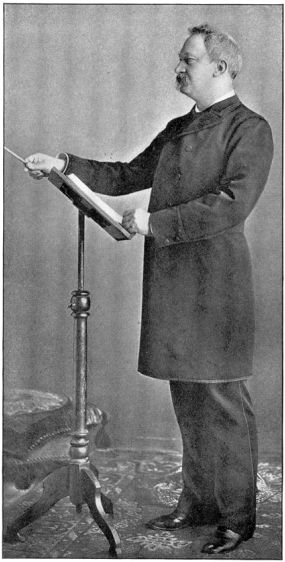 Russell takes on a subject that I had never considered before. Before Thomas began the Theodore Thomas Orchestra, there had not existed a permanent orchestra fully supported by public benefactors and ticket sales. Orchestra's did exist that were supported with government fund but none that could support itself. These government funded orchestras in the United States played music that, Thomas felt, was substandard in the world of music. He sought, with his orchestra, to introduce to the country great European composers like Beethoven and Wagner. His first orchestra made it's home in New York, but later it traveled the country. Thomas ended his career as the creator of the Chicago Symphony Orchestra which still plays in the orchestra hall he dreamed of and was finally able to have built shortly before his death in 1904. The hall still has the name Theodore Thomas Orchestra Hall inscribed in it's facade.
The story of Thomas and his orchestra is a painful one. Thomas spent most of his life in debt, partially due to his generosity and partially due to the fact that this type of orchestra was a novel idea in the United States and took some time to gain a footing. Thomas was also often criticized for not playing the type of music that the public wanted to hear - his standards were very high and he refused to lower them to play the waltzes and polkas demanded by the people. In the end, though, he succeeded in raising the standards of the people.
Russell knew Thomas and covered him as a journalist before writing this biography. Because of this he often writes in the first person. This is generally against all rules for this type of writing, but I found it a bit refreshing. It gave the story a more personal note - Russell knew this or that because he had witnessed it first hand. I truly enjoyed reading about this particular part of American history that I had never read about before.
Wednesday, August 13, 2008
The Bridge of San Luis Rey - Winner, Novel, 1928
The Bridge of San Luis Rey
By: Thornton Wilder
Albert & Charles Boni, Inc., 1927
The story begins with the collapse of an old Incan rope bridge over a canyon in Peru. Five people die, one person witnesses the event. That one person is Brother Juniper, a friar. Brother Juniper decides that there must be a reason that each person was on this particular bridge at this particular time, which must have been destined as the time for each of their deaths, and sets out to probe all possible nooks and crannies of their lives to determine what that reason might be.
The Bridge of San Luis Rey reads almost like a parable. Brother Juniper examines each life lost on the Bridge for any signs that would give good reason for that individual to be removed from this earth at that time. I won't go into the details of the lives so as not to give away exactly who dies, but it is true that each of the lives are connected to the others in some way. There is one woman who connects them all and, ironically, her life is not taken.
The question Brother Juniper seeks to answer is an age-old question that inevitably appears when tragedy strikes. "Why?" Was that person just in the wrong place at the wrong time? Is there a "destiny" on each of our lives that determines precisely when we will die? Why does it appear so unfair when the seemingly undeserving suffer? I believe that we often just have to place our trust in God at such times, knowing that we won't always have answers.
Thornton's book is very short (I think I read it in 3 hours) and easy to read. I recommend you read it to see what you think about his conclusions on why tragedies might inexplicably strike.
By: Thornton Wilder
Albert & Charles Boni, Inc., 1927
The story begins with the collapse of an old Incan rope bridge over a canyon in Peru. Five people die, one person witnesses the event. That one person is Brother Juniper, a friar. Brother Juniper decides that there must be a reason that each person was on this particular bridge at this particular time, which must have been destined as the time for each of their deaths, and sets out to probe all possible nooks and crannies of their lives to determine what that reason might be.
The Bridge of San Luis Rey reads almost like a parable. Brother Juniper examines each life lost on the Bridge for any signs that would give good reason for that individual to be removed from this earth at that time. I won't go into the details of the lives so as not to give away exactly who dies, but it is true that each of the lives are connected to the others in some way. There is one woman who connects them all and, ironically, her life is not taken.
The question Brother Juniper seeks to answer is an age-old question that inevitably appears when tragedy strikes. "Why?" Was that person just in the wrong place at the wrong time? Is there a "destiny" on each of our lives that determines precisely when we will die? Why does it appear so unfair when the seemingly undeserving suffer? I believe that we often just have to place our trust in God at such times, knowing that we won't always have answers.
Thornton's book is very short (I think I read it in 3 hours) and easy to read. I recommend you read it to see what you think about his conclusions on why tragedies might inexplicably strike.
Wednesday, July 30, 2008
Early Autumn: A Story of a Lady - Winner, Novel - 1927

Early Autumn: A Story of a Lady
By: Louis Bromfield
Stokes, 1926
I'm noticing a trend in the Novel/Fiction category of the Pulitzer Prize winners from the 1920s. Well-to-do girl/lady who is in an unhappy marriage or who has been denied her dreams by societal norms struggles to find a way to break free. Early Autumn is no different. It tells the story of Olivia Pentland and the Pentland family that she married into. Olivia despises the pretense of living as a Pentland should live to protect and uphold the virtue of the Pentland name only to discover that, in the end, she has indeed become a Pentland herself.
As I read through Bromfield's book, I began to think about the title. Why Early Autumn? When he began to speak of Olivia's obsession with turning 40 I realized that he seemed to be referring to a time of life. Spring would be one's childhood, while summer is the glory of young adulthood when everything seems possible. Olivia sees that she is turning 40 and it means that the prime of life is over for her. She knows that she will never go after her dreams. She is in the early autumn of life and things only slow down from there.
Even though Early Autumn fits the mold of the prize winning novels of the day, I enjoyed it. Bromfield presents Olivia's trials in a relatable way. The book is easy reading - it doesn't require a lot of thinking but is a good, low stress read.
Friday, July 25, 2008
A Great Honor
I wanted to take a selfish moment and thank Rebecca of Rebecca Reads for giving my blog an award for excellence. She has been a great faithful reader and has an excellent blog of her own. Thanks Rebecca and good luck with your own reading!
Tuesday, July 22, 2008
Whitman: An Interpretation in Narrative - Winner, Biography, 1927
Whitman: An Interpretation in Narrative
By: Emory Holloway
Alfred A. Knopf, 1926
"The proof of a poet is that his country absorbs him as affectionately as he has absorbed it."
-Walt Whitman

The above quote seems, to me, to capture the essence of Emory Holloway's Whitman. While Walt Whitman did not write great epic national poems proclaiming his loyalty to the United States, he did live out that loyalty in his daily life and Holloway shows this in example after example from Whitma's life. Whitman was enamored with the idea of the "wilderness," of the movement west into the vast unknown. He opposed the extension of slavery and as the Civil War came upon the nation he wrote his poem, "Beat! Drums! Beat!" to rally the patriotic of the North. When his brother, George, was wounded in battle Whitman made his way south to tend to him. Upon George's recovery Whitman, so moved by the plight of the injured, travelled to Washington, D.C. to make rounds among the wounded in the large number of military hospitals located there. He brought personal items to cheer the soldiers, sat and talked with them, and even took down letters for their families. He committed his life to helping soldiers from both North and South until 1873 when he was permanently disabled by a stroke.
Holloway's book did spend time discussing Whitman's literary work like his most famous, "Leaves of Grass," that endured many revisions over the year. But, what struck me most were the descriptions of Whitman's deep concern for the common man. He spent most of his free time riding up and down the bus lines observing and making friends with those he met along the way.
While Whitman's poetry is often beyond my comprehension, I do appreciate the life of the man. Holloway's writing is in itself poetic and a joy to read.
Thursday, July 03, 2008
The Life of Sir William Osler - Winner, Biography, 1926
The Life of Sir William Osler
By: Harvey Cushing
Clarendon Press, 1925
I spent WEEKS plowing through the hundreds of pages of The Life of Sir William Osler. Now, I'm not looking for sympathy - just putting a little perspective on the amount of time it has taken me to update this blog. This book contained every single, itty-bitty, teeny-tiny fact ever available on Sir William Osler. That is a LOT of information. Add to that the fact that the author, Harvey Cushing, was a neurosurgeon. As you can imagine his writing style wasn't exactly flowery or poetic. Just the dry facts. All of this for a book about someone that I had never heard of and would venture to guess that most who read this haven't heard of either.

Sir William Osler has been known as the father of modern medicine. He was the first Physician-in-Chief for Johns Hopkins Hospital and contributed to the development of Johns Hopkins Medical School. At a time when medical education focused on lectures in the classroom, Osler emphasized the importance of spending time in hospitals studying actual patients. He established the first medical residencies as an opportunity for more hands-on education.
I would be interested to know if any doctors or med students out there know of Osler. Perhaps this just isn't my world. But, I also appreciate the opportunity to learn about things I've never encountered.
Thursday, June 05, 2008
Pinckney's Treaty - Winner, Non-Fiction, 1927
 Pinckney's Treaty
 By: Samuel Flagg Bemis
Johns Hopkins Press, 1926
Pinckney's Treaty. Can anyone out there tell me off the top of their head what was involved in Pinckney's Treaty? I assure you that before I read this book I had no idea. I knew the name (which is more correctly the Treaty of Friendship, Limits, and Navigation Between Spain and the United States - much more telling), but could not for the life of me remember what it was all about. Maybe something to do with the Louisiana Purchase? Well, at least I was warm.
Samuel Flagg Bemis's Pickney's Treaty gave me all and more than I ever wanted to know about the subject. Basically, after the Revolutionary War our western and southern boundaries had to be negotiated with Spain. The book is about the time between the Revolution and the signing of the treaty on October 27, 1795 (precisely 185 years before the day of my birth - that's just a little extra for you all). We spent almost twenty years going back and forth with Spain about who had rights over what land.
In the end the treaty was signed making the Mississippi River our eastern boundary and the northern border of Florida (across southern Mississippi and Alabama to New Orleans) as our southern boundary. What was really huge about this was that the Americans were finally able to navigate the Mississippi River all the way to New Orleans where they were allowed to trade. Interestingly enough, after all of the time and effort put into the treaty, 8 years later Napoleon to the Louisiana Purchase back from Spain and basically gave it to the United States. This led to a new set of problems involving new boundaries to negotiate with Spain.
The book is full of facts and would be of great use to someone specifically researching the westward expansion of the United States, United States relations with Spain, or Pinckney's treaty specifically. It seems that there was a great interest in the westward expansion of the United States in the 1920's as the History of the American Frontier won for non-fiction in 1925. It is interesting to see the trends in subjects over time.
Thursday, May 22, 2008
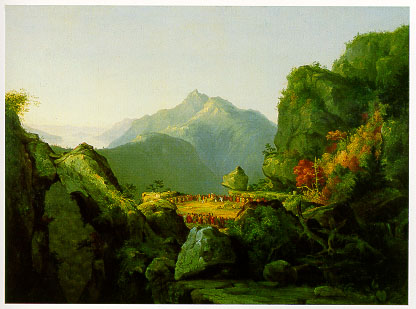
History of the American Frontier, 1763-1893 - Winner, Non-Fiction, 1925
 History of the American Frontier, 1763-1893
By: Frederic L. Paxson
Houghton Mifflin Company, 1924
A major theme in the first century, especially, of the history of the United States of America is the freedom to pack up one's life and head to a new, unexplored territory. The first colonists did this and generation after generation sought to expand, to find a better life in the vast unknown. Paxson's History of the American Frontier gives a good overview of this movement westward into the frontier.
The book is divided into relatively short chapters which helps to keep the reader from being overwhelmed by the immense amount of factual information being presented. Interestingly, each chapter could almost be read entirely independently from the others. The chapters are topical and, though they follow a general chronology, sometimes go back and forth in time leaving the reader with a mild sense of vertigo as he/she tries to remember exactly where things fit together.
The information in this book is interesting in small pieces, but as a whole I found the book to be a bit overwhelming in it's factual content.
Thursday, May 08, 2008
Main Currents in American Thought, 2 Vols. - Winner, Non-Fiction, 1928
Main Currents in American Thought, 2 Vols.
By: Vernon Parrington
Harcourt, Brace and Company, 1927
http://xroads.virginia.edu/%7EHyper/Parrington/
In Main Currents in American Thought, Parrington uses the example of important literary figures in American history to show the movement of thought through the years. His main focus is the difference between Hamiltonian federalism (big federal government, focus on capitalism) and Jeffersonian populism (states rights, focus on agrarianism) over time. The interesting thing is that, even though some of the issues might have shifted around there is still a basic divide in our country between those who feel that the federal government should be more involved in our lives and those who believe that that should be left to the states.
Parrington's book is not entertaining in the least. But, it would be a useful tool for research as each literary figure's section is neatly separated from the others and could be helpful to the researcher looking for information on a certain person. The thing that impressed me most was the vast amount of research that Parrington must have done to complete this work. Many of the literary figures he focused on were not necessarily the most famous. Imagine doing in depth research in the 1920s - no Internet, not even easy access between different libraries. This is truly an impressive feat.
Totally unrelated fact - Vernon Parrington was also the second head coach of the University of Oklahoma football team. Just thought that might interest somebody.
By: Vernon Parrington
Harcourt, Brace and Company, 1927
http://xroads.virginia.edu/%7EHyper/Parrington/
In Main Currents in American Thought, Parrington uses the example of important literary figures in American history to show the movement of thought through the years. His main focus is the difference between Hamiltonian federalism (big federal government, focus on capitalism) and Jeffersonian populism (states rights, focus on agrarianism) over time. The interesting thing is that, even though some of the issues might have shifted around there is still a basic divide in our country between those who feel that the federal government should be more involved in our lives and those who believe that that should be left to the states.
Parrington's book is not entertaining in the least. But, it would be a useful tool for research as each literary figure's section is neatly separated from the others and could be helpful to the researcher looking for information on a certain person. The thing that impressed me most was the vast amount of research that Parrington must have done to complete this work. Many of the literary figures he focused on were not necessarily the most famous. Imagine doing in depth research in the 1920s - no Internet, not even easy access between different libraries. This is truly an impressive feat.
Totally unrelated fact - Vernon Parrington was also the second head coach of the University of Oklahoma football team. Just thought that might interest somebody.
Tuesday, April 29, 2008
Arrowsmith - Winner, Novel/Fiction, 1926
Arrowsmith
By: Sinclair Lewis
Harcourt Brace and Company, 1925
Arrowsmith follows the life of Dr. Martin Arrowsmith as he moves from reading Gray's Anatomy in a doctor's office in a small Midwest town to an unhappy doctor and, finally, to one of the world's leading scientist. Arrowsmith move up the ranks as a scientist with the unwavering support of his wife, Leora. He spends most of his life skeptical of most doctors of the time who practiced medicine superficially - convincing people of ailment so that they would have to pay for treatment - and caring very little for finding out exactly why illnesses and diseases occurred.
 When I finished this book, I breathed a contented sigh of relief and for a moment felt very happy that Martin Arrowsmith was finally able to find the life he had so desired all of his life. He spent his entire life searching for the thing that would make him happiest and actually found it. But then, after I really thought about it, I realized that he had accomplished this at great cost. He was an incredibly selfish man. Along the way his searching cost the death of his faithful and loyal first wife, whom he often neglected, and the abandonment of his second wife and his only child. He hurt many people along the way. So, my question is, is it truly worth it? Our natural inclination as humans is to search for what will make us happy. Lewis leaves us with the assumption that Arrowsmith died happy, no matter how he hurt others along the way. Is that reality? Is it possible to search for our own happiness and find it if we end up virtually alone?
Lewis's book, like his others, carries heavy overtones of sarcasm - often resulting in comedic scenarios. He was highly critical of American society and capitalism at the turn of the century. The book was a bit long, though, for all of the criticisms it containing. I got his point long before reaching the 440th page. Interestingly, Lewis declined the Pulitzer because he felt that these kinds of prizes caused authors to write for the prize committee and not for excellence. He also felt that "the appraisal of the novels shall be made not according to their actual literary merit but in obedience to whatever code of Good Form may chance to be popular at the moment."
By: Sinclair Lewis
Harcourt Brace and Company, 1925
Arrowsmith follows the life of Dr. Martin Arrowsmith as he moves from reading Gray's Anatomy in a doctor's office in a small Midwest town to an unhappy doctor and, finally, to one of the world's leading scientist. Arrowsmith move up the ranks as a scientist with the unwavering support of his wife, Leora. He spends most of his life skeptical of most doctors of the time who practiced medicine superficially - convincing people of ailment so that they would have to pay for treatment - and caring very little for finding out exactly why illnesses and diseases occurred.
 When I finished this book, I breathed a contented sigh of relief and for a moment felt very happy that Martin Arrowsmith was finally able to find the life he had so desired all of his life. He spent his entire life searching for the thing that would make him happiest and actually found it. But then, after I really thought about it, I realized that he had accomplished this at great cost. He was an incredibly selfish man. Along the way his searching cost the death of his faithful and loyal first wife, whom he often neglected, and the abandonment of his second wife and his only child. He hurt many people along the way. So, my question is, is it truly worth it? Our natural inclination as humans is to search for what will make us happy. Lewis leaves us with the assumption that Arrowsmith died happy, no matter how he hurt others along the way. Is that reality? Is it possible to search for our own happiness and find it if we end up virtually alone?
Lewis's book, like his others, carries heavy overtones of sarcasm - often resulting in comedic scenarios. He was highly critical of American society and capitalism at the turn of the century. The book was a bit long, though, for all of the criticisms it containing. I got his point long before reaching the 440th page. Interestingly, Lewis declined the Pulitzer because he felt that these kinds of prizes caused authors to write for the prize committee and not for excellence. He also felt that "the appraisal of the novels shall be made not according to their actual literary merit but in obedience to whatever code of Good Form may chance to be popular at the moment."
Wednesday, April 09, 2008
So Big - Winner, Fiction, 1925
So Big
Doubleday, Page, & Co., 1924
So Big is the story of Selina Peake DeJong, a city girl who, after being orphaned, moves to the country south of Chicago to be a school teacher. Selina has a high sense of adventure and beauty in the world, and the running joke among the farmers for a good part of the books is how Selina pronounced, upon seeing their produce in the fields, the beauty of their cabbages.  Selina teaches until she meets and marries Pervus DeJong and gives birth to their son, Dirk. The title of the book comes from a game that Selina and Dirk played when he was a baby where she would say, "How big is baby?" and he would reply "Soooooooooo Big!" That became his pet name - used only by his mother. Selina becomes fascinated with the process of farming and progress in farming, and, when Pervus dies several years into their marriage, she takes pulls herself up by her bootstraps and takes control of the farm herself. Along the way Selina determines that Dirk will not be stuck on the farm like the other sons of farmers. She pushes him to seek knowledge and beauty. She wants him to know things, but she also wants him to appreciate the beauty in the world. The story continues with Dirk getting an education, moving to the city, and becoming wildly successful, all the while forgetting his mother's encouragement to appreciate the beauty in life.
 Selina teaches until she meets and marries Pervus DeJong and gives birth to their son, Dirk. The title of the book comes from a game that Selina and Dirk played when he was a baby where she would say, "How big is baby?" and he would reply "Soooooooooo Big!" That became his pet name - used only by his mother. Selina becomes fascinated with the process of farming and progress in farming, and, when Pervus dies several years into their marriage, she takes pulls herself up by her bootstraps and takes control of the farm herself. Along the way Selina determines that Dirk will not be stuck on the farm like the other sons of farmers. She pushes him to seek knowledge and beauty. She wants him to know things, but she also wants him to appreciate the beauty in the world. The story continues with Dirk getting an education, moving to the city, and becoming wildly successful, all the while forgetting his mother's encouragement to appreciate the beauty in life.
I loved this book and read through it so quickly. I enjoyed the idea of a woman being stranded on a farm, forced to make her own way, and not sitting around feeling sorry for herself but making success and never losing her sense of adventure and beauty in the world. She is industrious, innovative, and wise. The story is also an interesting study in the way we raise children. How does one impart the ideas that one cherishes and loves into one's children without pushing them away from those exact things? In this Selina seems to fail, but the reader is left wondering if Dirk might have possibly caught on.
Again, we find that the acclaimed writers of fiction in the 1920s seem to all have a fascination with the development of the Midwest in common. It seems like it might become monotonous, but it hasn't yet for me.
Subscribe to:
Posts (Atom)